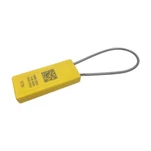
Our RFID electrical cable seals tag combines a flexible wire-loop closure, durable RFID housing and unique electronic identity. It supports faster inspection of meters, electrical cabinets, control boxes and other restricted access points while leaving visible evidence when the sealing loop is breached.
RFID Electrical Cable Seal Configuration
The physical seal, RFID configuration and reader system should be selected together because electrical assets vary in hole size, metal content, enclosure layout and inspection distance.
| Configuration Area | Available Product Function | Information Required |
|---|---|---|
| RFID identity | Contactless electronic seal identification | Required numbering structure and record format |
| Frequency and chip | Selected for the reader and application | Reader model, protocol and operating country |
| Reading distance | Depends on the confirmed RFID configuration | Minimum and maximum inspection distance |
| Housing | ABS enclosure for the RFID assembly | Available space and operating environment |
| Sealing element | Flexible wire or cable loop | Hole diameter, cable path and required length |
| Tamper evidence | Visible evidence after the sealing loop is breached | Required removal and inspection procedure |
| Installation | Loop-through hanging or locking arrangement | Photographs of the final sealing points |
| Visible data | Serial number, barcode, text or logo | Artwork and variable-data file |
| Electronic data | Project-specific RFID encoding | Data structure, lock rules and output file |
| Color | Confirmed standard or custom housing color | Color reference and operational meaning |
Seal Electrical Access Points Without Covering Labels
A practical installation keeps the wire route short, the RFID housing accessible and the equipment's safety labels, terminals and ventilation areas unobstructed.
Identify the Access Point
Choose the door, cover, meter or connector that must not be opened without inspection.
Measure the Wire Route
Record the hole diameter, total loop length and clearance around energized components.
Position the RFID Housing
Place the housing where technicians can read and visually inspect it without opening the cabinet.
Verify the Installed Seal
Read the electronic identity and compare it with the equipment and work-order record.
Match the Cable Seal to the Electrical Enclosure
| Enclosure Detail | Measurement or Check | Required Installation Result |
|---|---|---|
| Sealing holes | Measure the smallest hole in the complete route. | The selected cable passes through without modification. |
| Door movement | Check hinge travel, vibration and routine operation. | Normal movement does not create false damage. |
| Cable length | Measure the full path with the enclosure closed. | The loop closes with limited, visible slack. |
| Housing clearance | Check adjacent handles, covers and moving components. | The RFID housing remains protected and readable. |
| Electrical clearance | Identify terminals, conductors and required safety distances. | The seal does not interfere with safe equipment operation. |
| Reader approach | Define where the technician will present the reader. | Identity can be checked without opening the enclosure. |
Electrical Asset Applications
Utility Meter Covers
Identify sealed meter access points and compare each seal with the registered customer or site record.
Distribution Cabinets
Control access to cabinet doors while keeping the RFID identity available for scheduled inspections.
Control Panels
Seal compatible covers or handles after maintenance, commissioning or configuration work.
Transformer Enclosures
Apply the cable seal to approved external access points after checking electrical and mechanical clearance.
Communication Cabinets
Link cabinet access with a unique RFID identifier and field-service record.
Equipment Connectors
Protect compatible removable connectors or junction covers that require controlled authorization.
Build the Field Inspection Workflow
Issue
Assign the electronic and printed seal identity to the correct equipment record.
Install
Route the cable through the approved holes and close it according to the work instruction.
Inspect
Read the tag and compare the cable, housing and visible number with the expected record.
Replace
Record authorized removal and issue a new seal after service or equipment access.
Define Each Inspection Outcome
| Inspection Condition | Technician Check | Record Action |
|---|---|---|
| Expected intact seal | RFID identity, printed number and cable condition match. | Complete the planned inspection event. |
| Wrong electronic identity | The read tag is not assigned to the equipment. | Stop approval and investigate possible replacement. |
| Cut or breached cable | The original sealing loop is visibly interrupted. | Create an access exception and retain evidence. |
| Damaged housing | The enclosure shows impact, opening or attempted removal. | Inspect the protected access point before resealing. |
| Unreadable RFID tag | No reliable electronic identity is obtained. | Repeat the read and use the visible identifier. |
| Authorized service opening | The work order permits access to the enclosure. | Close the old seal record and assign a replacement. |
Select the RFID Reading Method
Close Field Inspection
Use a compatible handheld reader when technicians inspect individual cabinets or meters.
Batch Asset Identification
Use the selected RFID configuration to identify multiple accessible seals within a controlled area.
Fixed Checkpoint Reading
Install fixed readers only where the reading boundary and intended seal population can be controlled.
Coordinate RFID Data with Maintenance Records
| Data Element | Suggested Relationship | Management Purpose |
|---|---|---|
| RFID identity | One electronic identity for each issued seal | Distinguish the installed seal from replacements. |
| Printed serial number | Matched with the encoded RFID record | Support inspection when electronic reading is unavailable. |
| Equipment identifier | Linked to meter, cabinet or site ID | Confirm that the seal is installed on the correct asset. |
| Installation event | Technician, time, location and work order | Establish the beginning of the sealed period. |
| Inspection event | Reader result and physical condition | Create a history of verified field checks. |
| Removal event | Authorization and replacement seal number | Close the previous seal lifecycle without losing traceability. |
Printing and Encoding Options
Visible Identification
- Human-readable seal number
- Equipment or site identifier
- Barcode or QR code
- Company name or logo
RFID Data
- Customer-defined electronic ID
- Sequential encoding
- Readback verification
- Mapping file for integration
Physical Configuration
- Application-matched cable length
- Compatible cable diameter
- Confirmed housing color
- Project-specific packaging
Information Needed for Configuration
Electrical Application Details
- Meter, cabinet or equipment type
- Closure photographs and hole dimensions
- Required cable length and diameter
- Electrical-clearance restrictions
- Indoor or outdoor operating conditions
RFID and Order Details
- Reader and software models
- Required frequency and reading distance
- Electronic numbering structure
- Printing and variable-data file
- Quantity and delivery destination
Related RFID Security Seals
Compare cable dimensions, reader compatibility, housing size, tamper response and installation method before selecting another RFID seal.
RFID Electrical Cable Seal Questions
Which electrical equipment can use this cable seal? +
Potential applications include compatible meter covers, distribution cabinets, control panels, communication enclosures and equipment connectors. The sealing holes, cable route and electrical clearance must be checked first.
Does RFID prove that the cabinet has never been opened? +
RFID identifies the seal, while the cable and housing provide physical tamper evidence. The inspection result must combine the electronic identity, visible condition and authorized maintenance history.
Can the tag be read through a closed metal cabinet? +
Metal can shield or alter RFID performance. Position the housing outside the enclosure and test it with the intended reader rather than assuming the signal will pass through a closed metal cabinet.
How should the cable length and diameter be selected? +
Measure the smallest sealing hole and the complete route with the enclosure closed. Select a cable that passes through the holes, limits unnecessary slack and can be removed with the authorized tool.
Can multiple cabinet seals be identified together? +
Batch identification depends on the selected RFID chip, protocol, reader, tag spacing and surrounding metal. Test the expected number of installed seals before approving the inspection process.
Can a removed seal be installed again? +
A breached sealing element should not be treated as an intact seal. After authorized access, close the old record and install a new configured seal according to the maintenance procedure.
Can the seal number match an existing asset database? +
We can review customer-defined visible and electronic identifiers. Provide the field structure, sample data, uniqueness rules, barcode format and required mapping-file layout.
What information is required for a quotation? +
Please provide the equipment type, closure photographs, hole dimensions, cable requirements, housing position, reader model, frequency, reading distance, encoding, printing, quantity and destination.
Configure the Seal for Your Electrical Asset
Send us the equipment and closure photographs, cable dimensions, reader setup, required inspection distance, encoding, printing and quantity for configuration review.
Request an Electrical Seal ReviewHot Tags: RFID electrical cable seals tag, China RFID electrical cable seals tag manufacturers, suppliers, factory, rfid seal for construction, rfid seal for equipment, rfid seal for ip cameras, rfid seal for scanners, rfid seal for tiles, rfid seal for warehouse