

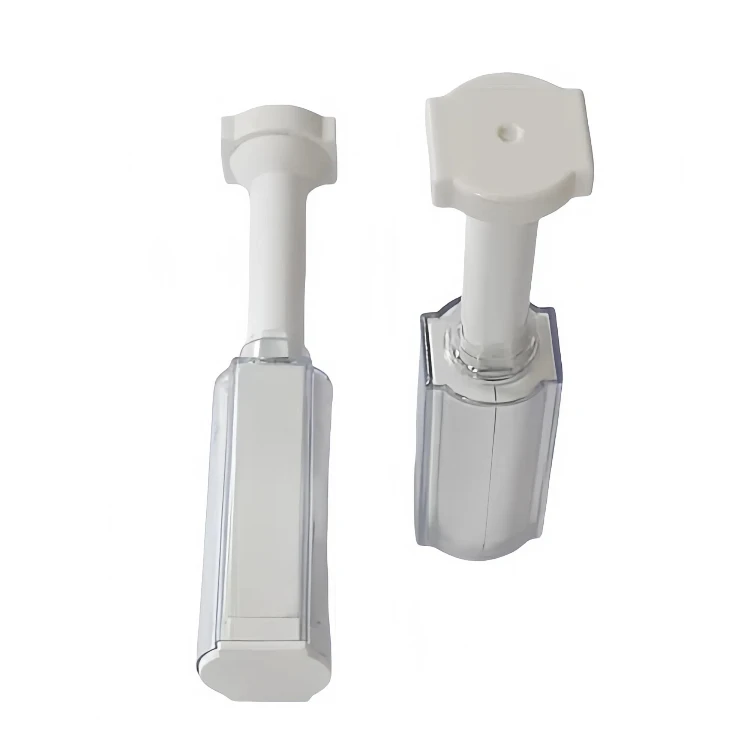


Our bolt RFID seal combines a galvanized-steel locking structure with a passive UHF transponder for cargo, transport and controlled asset-sealing applications. The listed 75 mm bolt configuration supports non-contact identification and customized serialized data.
Bolt RFID Seal Specifications
Confirm the bolt dimensions, locking point, chip, memory, frequency and reader conditions before approving the production configuration.
| Specification | Available Configuration | Order Confirmation |
|---|---|---|
| Bolt length | 75 mm | Check the complete locking-point dimensions |
| Chip | Alien Higgs 3 or Higgs 4 | Other chips can be reviewed |
| TID memory | 96 bits | Define whether TID must be captured |
| EPC memory | 96 bits | Submit the required encoding structure |
| User memory | 512 bits | Confirm final content and chip capacity |
| Operating frequency | 860–960 MHz | Specify the destination market |
| Reference read range | Up to 10 m | Reader and installation dependent |
| Housing | Galvanized carbon steel, PC and ABS | Confirm the required housing color |
| Ingress protection | IP65 | Match with the intended exposure |
| Installation | Insert-and-lock style | Check the hole diameter and clearance |
| Standard color | White | Customized colors can be reviewed |
| Stated tensile strength | More than 15 kN | Confirm the applicable test requirement |
| Write endurance | More than 100,000 cycles | Chip-memory specification |
Confirm the Locking Point Before Ordering
The nominal bolt length alone does not determine fit. Buyers should inspect the complete mechanical interface where the seal will be installed.
Hole Diameter
Measure the narrowest opening through which the bolt must pass without forcing or modification.
Material Thickness
Add the thickness of all hasps, brackets or door components captured by the seal.
Available Clearance
Check the space required to insert the pin and press the locking body into position.
Reader Orientation
Record how the RFID housing faces the handheld or fixed reader after installation.
Removal Access
Ensure authorized personnel can safely reach the bolt with the approved cutting tool.
Surrounding Metal
Test the installed tag because nearby steel can change UHF reading performance.
Application and Verification Process
Identify
Read or record the EPC, TID and visible number before application.
Insert
Pass the bolt through the approved locking point without bending the pin.
Lock
Push the bolt fully into the body and complete a manual pull check.
Register
Associate the applied seal with the shipment, vehicle or protected asset.
RFID Data Configuration
The electronic identity can be connected with visible marking and buyer-controlled management records.
| Data Area | Configuration | Typical Use |
|---|---|---|
| TID | 96-bit chip-associated identifier | Secondary electronic reference |
| EPC | 96-bit customer-approved value | Primary reader and system identity |
| User memory | Up to 512 bits with listed chip | Additional project-defined data |
| Visible number | Sequential printed or marked value | Manual verification |
| Barcode or QR | Approved visible code format | Alternative close-range data capture |
| Matching file | CSV or agreed structured file | ERP, WMS or platform import |
Incoming Batch Inspection
A defined sampling plan allows procurement and quality teams to inspect mechanical, visual and RFID characteristics before use.
| Inspection Area | Check | Recorded Result |
|---|---|---|
| Packaging | Carton, batch and number-range labels | Quantity and range reconciliation |
| Appearance | Housing, bolt finish and visible marking | Accepted and rejected units |
| Dimensions | Bolt length and critical application fit | Measured values by sample |
| Locking | Insertion, engagement and pull check | Locking result by sample |
| RFID identity | EPC and TID against the supplied file | Data match or discrepancy |
| Installed reading | Tag fitted to production-equivalent hardware | Reader, distance and orientation |
Suitable Bolt RFID Seal Applications
Shipping Containers
Use on compatible cargo-door hasps requiring a strong single-use bolt seal.
Truck Trailers
Assign the serialized seal to a vehicle, route and transport record.
Rail Freight
Support electronic identification during controlled rail-cargo transfers.
Warehouse Dispatch
Register the seal after loading and before the cargo unit leaves the site.
High-Value Equipment
Apply to compatible locking points on protected industrial assets or enclosures.
System Integration
Connect RFID and visible identifiers with existing operational records.
OEM Configuration and Packaging
Seal Appearance
- White or approved custom color
- Company logo and product text
- Sequential visible numbering
- Barcode or QR code
Electronic Configuration
- Alien Higgs 3 or Higgs 4
- Sequential EPC programming
- User-memory programming
- Required memory locking
Order Delivery
- Defined serial range by batch
- Carton and package identification
- Electronic matching data
- Buyer-approved export packaging
Information Required for a Quotation
Mechanical Requirements
- Application and locking-point photographs
- Hole diameter and material thickness
- Required bolt length and clearance
- Tensile or mechanical test requirement
- Housing color and visible artwork
RFID and Commercial Requirements
- Destination market and frequency band
- Reader and antenna model
- Chip, EPC and memory requirement
- Quantity and matching-file format
- Packaging, destination and schedule
Related RFID Security Seals
Compare the bolt dimensions, mechanical strength, attachment method and RFID configuration before selecting a seal.
Bolt RFID Seal Questions
What is the listed bolt length? +
The listed bolt length is 75 mm. The hole diameter, combined material thickness and installation clearance should also be checked before ordering.
What tensile strength is stated for the seal? +
The target product information states tensile strength above 15 kN. Provide the required test method and acceptance documentation when requesting a quotation.
Which RFID chips are available? +
The listed options are Alien Higgs 3 and Higgs 4. Other chips can be reviewed against the required frequency, memory, reader system and order quantity.
Can the seal reach a 10-meter reading distance? +
Up to 10 meters is the listed reference range. Actual performance depends on the reader, antenna, permitted output, tag position, surrounding metal and site conditions.
Can the housing color and number be customized? +
White is the listed standard color. Custom color, logo, text, serial number, barcode and QR-code requirements can be reviewed for production.
Can the EPC and visible serial number be matched? +
Yes. They can follow a defined matching structure or be connected through a production file containing the visible number, EPC and TID.
Is the bolt RFID seal reusable? +
The physical bolt-seal construction is intended for one-time locking and authorized removal. Electronic write endurance does not make the mechanical seal reusable.
What information is needed for pricing? +
Please provide the application, locking-point dimensions, mechanical requirement, destination market, reader model, chip, EPC format, artwork, quantity and delivery destination.
Confirm the Bolt Seal Before Production
Send us the locking-point dimensions, mechanical requirement, reader setup, chip, EPC format, visible marking and quantity for configuration review and pricing.
Request a Bolt RFID Seal ReviewHot Tags: bolt RFID seal, China bolt RFID seal manufacturers, suppliers, factory, rfid authentication seal, rfid seal for asset management software, rfid seal for footwear, rfid seal for goods, rfid seal for networking equipment, rfid seal for recycling


