

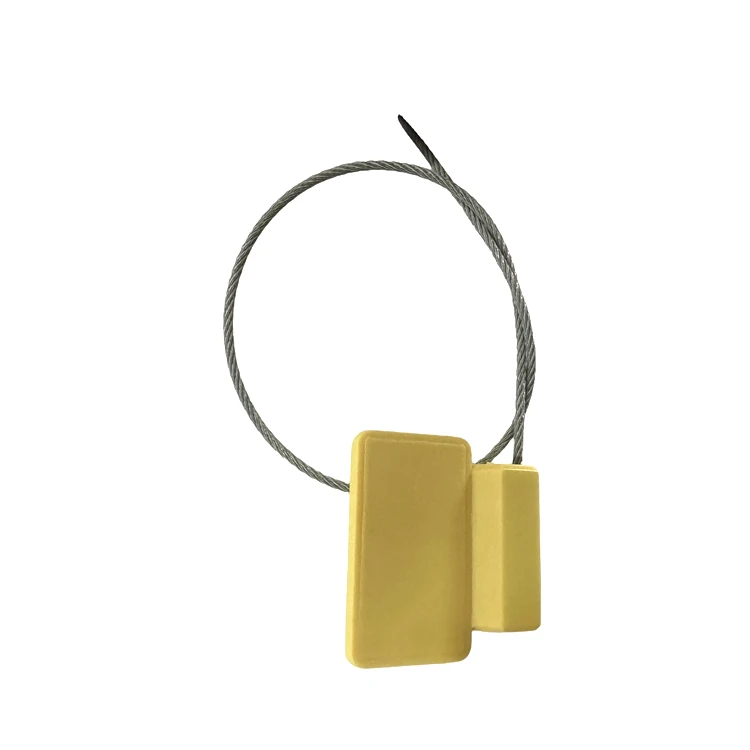


Our plastic tamper evident seal combines a compact PC housing, Qstar-73GB UHF chip and flexible locking installation. It supports serialized control of totes, bags, cases and other light logistics units where operators need both a visible seal and an electronic record.
Plastic Tamper Evident Seal Specifications
The compact format and moderate reading distance suit controlled warehouse, packing and receiving checkpoints.
| Specification | Listed Configuration | Buyer Requirement |
|---|---|---|
| Seal dimensions | 36 × 20 × 12.5 mm | Check clearance around the closure. |
| Chip | Qstar-73GB | Confirm reader and command compatibility. |
| Protocol | ISO 18000-6C Gen2 V2 | Match the intended UHF infrastructure. |
| TID/UID | 96 bits | Define whether TID is recorded. |
| EPC memory | 160 bits | Approve the serialized identifier format. |
| User memory | 512-bit User File_0 | Define fields and update permissions. |
| Operating frequency | 920.5–924.5 MHz | Confirm the deployment country. |
| Reference read range | Up to 200 cm | Test the installed logistics unit. |
| Housing | PC housing | Validate the handling environment. |
| Installation | Tie, tighten, insert or locking style | Specify the matching tie or closure. |
| Color | Yellow or customized | Define color and batch rules. |
| Characteristics | On-metal use and tamper-proof structure | Validate removal evidence and RF performance. |
Choose the Seal for Light Logistics Units
Reusable Tote
Secure the lid or access flap while keeping the seal clear of stacking and conveyor contact points.
Transit Bag
Check the zipper, eyelet or reinforced opening and define the required tie length.
Equipment Case
Apply the seal across the intended latch and test the effect of metal case hardware.
Parts Container
Link the serialized seal with the contents, order, workstation or receiving destination.
Create a Batch-to-Seal Relationship
| Data Level | Required Identifier | Purpose | Reconciliation Rule |
|---|---|---|---|
| Supply batch | Purchase order and production batch | Incoming inspection and stock control | Quantity must match the received file |
| Individual seal | EPC, TID and visible serial | Unique electronic and visual identity | All supplied identities must correspond |
| Secured unit | Tote, bag, case or order number | Connect the seal with the protected contents | Only one active seal per closure record |
| Dispatch event | Facility, operator and release time | Document outgoing custody | Seal must be valid before release |
| Receipt event | Destination, receiver and result | Close the protected movement | Mismatch requires separate review |
Apply and Verify the Plastic Seal
Assign
Select an unused EPC and link it with the item, order and responsible operator.
Install
Pass the seal through the intended closure and complete the approved locking action.
Read
Verify the electronic identity and visible code after the seal is installed.
Release
Record the final result before the secured unit leaves the controlled area.
Use the Available Memory Deliberately
EPC Memory
- 160-bit primary seal identity
- Controlled serialized numbering
- Routine UHF identification
- Backend-record lookup key
User File
- Selected compact project fields
- Documented data offsets
- Controlled write permissions
- Post-write verification
Backend Record
- Contents and shipment details
- Operator and facility identity
- Dispatch and receipt events
- Inspection and exception history
Define the Receiving Inspection
| Inspection Result | Electronic Check | Physical Check | Receiving Action |
|---|---|---|---|
| Expected seal | EPC matches the shipment record | Housing and closure appear undisturbed | Continue the approved opening process |
| Unknown EPC | No approved record exists | Inspect visible serial and attachment | Quarantine pending investigation |
| Visible-code mismatch | EPC belongs to a different printed code | Check for picking or replacement error | Do not approve automatically |
| Unreadable seal | No reliable response is obtained | Inspect damage and installation position | Use the manual exception procedure |
| Removal evidence | Compare any supported condition result | Document the housing and closure | Hold contents for authorized review |
Printing, Color and Encoding Options
Visible Identification
- Human-readable serial number
- Barcode or QR code
- Customer logo and text
- Yellow or customized color
Electronic Identification
- Customer-defined EPC structure
- Optional user-file data
- TID capture where required
- Encoding readback verification
Delivery Data
- EPC-to-visible-code mapping
- Batch and order reference
- Packaging sequence
- Required output-file format
Information Needed for Configuration
Application Details
- Tote, bag, case or container type
- Closure photographs and dimensions
- Tie or locking requirement
- Nearby metal and packed contents
- Storage and handling conditions
RFID and Order Details
- Deployment country and UHF band
- Reader and antenna models
- EPC and user-memory data map
- Color, artwork and encoding file
- Quantity and destination country
Related RFID Plastic Security Seals
Compare chip memory, read range, housing size, installation method and removal evidence across related seal options.
Plastic Tamper Evident Seal Questions
Is this a conventional plastic seal or an RFID seal? +
This configuration includes a Qstar-73GB UHF RFID chip in a compact PC housing. It requires compatible UHF readers for electronic identification.
Will the seal always read from two metres? +
No. The reference distance depends on the reader, antenna, permitted power, tag orientation, installation point, packed contents, surrounding materials and interference.
Does an EPC read prove that the seal was not opened? +
An EPC read confirms that an electronic identity responds. The receiving decision should also use the physical seal condition, supported tamper result and expected shipment record.
What can be stored in the 512-bit user file? +
It can store selected compact project fields. Define the memory map before encoding and keep detailed shipment, contents and event histories in the backend database.
Can the visible serial number match the EPC? +
We can review matched EPC, serial-number, barcode and QR-code requirements. Provide the numbering structure, artwork, encoding input and required output-file format.
What information is required for a quotation? +
Please provide the secured unit, closure dimensions, tie requirement, deployment country, reader models, EPC and memory map, color, artwork, encoding data, quantity and destination.
Configure the Plastic Seal for Your Logistics Unit
Send us the tote, bag, case or container details, closure dimensions, operating region, reader setup, EPC rules, memory map, color, artwork, encoding data and quantity for review and pricing.
Request a Plastic Seal ReviewHot Tags: plastic tamper evident seals, China plastic tamper evident seals manufacturers, suppliers, factory, rfid seal for confectionery, rfid seal for pharmaceuticals, rfid seal for tools, rfid seal for warehouse, rfid seal for window locks, rfid tracking seal


