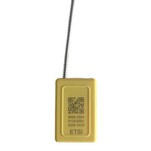
Our plastic RFID seal tag gives pallets, returnable containers, racks and production carriers a compact UHF identity without relying on an adhesive label. The tie-up or locking installation supports controlled attachment while the M4E chip connects each tagged item with warehouse or manufacturing records.
Plastic RFID Seal Tag Specifications
The compact PP housing is listed for metal-compatible installation. Confirm the operating band and complete attachment assembly for the intended facility.
| Parameter | Listed Configuration |
|---|---|
| Housing dimensions | 47.5 × 26 × 2 mm |
| RFID chip | M4E |
| TID / UID | 96 bits |
| EPC memory | Up to 496 bits; approve the final memory allocation |
| User memory | 128 bits; confirm availability with the required EPC length |
| Access password | 32 bits |
| Kill password | 32 bits |
| Operating frequency | 920.5–924.5 MHz |
| Housing material | PP, polypropylene |
| Reference read range | Up to 150 cm in free air, reader dependent |
| Installation | Tie-up, tighten, insert or locking style |
| Available colors | White, blue, pink, yellow, green or customized |
| Mounting characteristic | Metal-compatible design; verify on the final item |
Tag Returnable Logistics Equipment
The attachment point should keep the RFID housing in a predictable position throughout handling, storage and return cycles.
Pallets
Attach through a protected eyelet or retaining point that does not interfere with forks, stacking surfaces or pallet repair.
Reusable Totes
Place the tag where it remains visible and readable when the tote is filled, closed, stacked and transported.
Metal Cages
Use the metal-compatible configuration on a stable frame point and test the reader from normal aisle or gate positions.
Tool Carriers
Identify carts, trays or tool cases moving between production lines, storage and maintenance areas.
Parts Racks
Connect each rack with its material, production order or destination without placing the tag on a replaceable part.
Rental Equipment
Assign the RFID identity to a carrier or equipment record used during issue, return and inventory checks.
Track Movements Between Operational Zones
| Checkpoint | RFID Action | System Update |
|---|---|---|
| Receiving | Read the arriving tag and check the carrier identity. | Record receipt, supplier or originating site. |
| Storage | Identify tagged carriers entering the designated area. | Update the expected warehouse zone. |
| Production issue | Read the carrier before releasing parts to the line. | Associate it with the order, station or operator. |
| Work in process | Capture the tag at defined manufacturing transitions. | Update process location rather than product quality. |
| Dispatch | Compare read identities with the shipment list. | Close the site inventory and create a movement record. |
| Return | Read the empty carrier and inspect the attachment. | Mark it available, held for cleaning or under repair. |
Separate Carrier Identity from Contents
A reusable carrier may hold different materials during its life. Keep permanent carrier data separate from the current load assignment.
| Data Type | Example | Recommended Location |
|---|---|---|
| Carrier identity | Pallet, tote, rack or cart number | Stable database record linked to the EPC |
| RFID identity | EPC and required TID | Tag memory and system mapping file |
| Current contents | SKU, batch or work order | Changeable transaction record |
| Current location | Warehouse, line, vehicle or customer site | Latest verified system event |
| Carrier condition | Available, loaded, damaged, cleaning or repair | Operational status record |
| Visible reference | Serial number or barcode | Housing marking matched with the RFID data |
Plan the Read Zone
Handheld Inventory
Set a practical operator distance and test closely spaced carriers to avoid assigning a nearby RFID identity to the wrong item.
Warehouse Doorway
Define which direction and movement should create an event. Control reads from stored tags beside the doorway.
Conveyor Point
Check tag orientation, item spacing, conveyor speed and the metal structure surrounding the reader antenna.
Production Station
Use a controlled read area where one intended carrier can be associated with the current operation.
Loading Gate
Compare captured tags with the dispatch list and define how unexpected nearby carriers are handled.
Outdoor Yard
Confirm the required environmental protection separately because the target page does not state an IP rating.
Color and Data Configuration
Color Coding
- White, blue, pink, yellow or green
- Site or department identification
- Carrier-type classification
- Custom color subject to approval
RFID Data
- Customer-defined EPC structure
- Required user-memory content
- TID capture and mapping
- Access and kill password policy
Visible Identification
- Carrier or seal serial number
- Barcode and human-readable text
- Company logo or site code
- Visible-to-RFID matching file
Pilot Test Before Rollout
Tag Representative Items
Include each carrier material, size, attachment point and loading condition.
Test Every Checkpoint
Use the intended readers at receiving, storage, production and dispatch.
Check Read Exceptions
Record missed tags, duplicate events and reads from adjacent items.
Approve the Data Flow
Confirm how each reader event updates carrier, load and location records.
Information Required for Configuration
Item and Workflow
- Carrier or equipment photographs
- Material and attachment dimensions
- Movement route and checkpoints
- Indoor or outdoor handling conditions
- Expected reuse or replacement process
RFID and Order Data
- Country of use and reader models
- Required read distance and tag count
- EPC, TID and user-memory requirements
- Color, visible marking and artwork
- Quantity, packaging and destination
Plastic RFID Seal Tag Questions
Is this tag suitable for pallets and reusable containers?
It can be evaluated where the pallet or container has a protected tie-up or locking point. Test attachment security, handling clearance and installed reading performance before deployment.
Is the tie reusable?
The published page lists several installation styles but does not define one universal tie assembly. Confirm whether the supplied attachment is permanent, replaceable or reusable for your configuration.
Can multiple tags be read at the same time?
Compatible UHF readers can inventory multiple tags, but the achievable result depends on tag spacing, item materials, orientation, antenna layout and the number of tags within the read zone.
Can the tag identify the contents of a container?
The tag identifies its encoded record. The connected warehouse or manufacturing system must associate that identity with the current contents and update the assignment when the load changes.
Does this model include temperature or tamper sensors?
The listed M4E specification establishes UHF identification and memory but does not establish temperature or electronic tamper sensing. Sensor requirements need a separately confirmed design.
Is this an outdoor weatherproof tag?
The target specification does not provide an IP rating, operating-temperature range or weathering result. State the outdoor conditions so the required housing performance can be reviewed.
Will the 920.5–924.5 MHz tag work in our market?
Provide the destination country and reader model. The listed band should be checked against the applicable local frequency plan rather than treated as a universal global configuration.
What information is required for a quotation?
Please provide the item and attachment photographs, country of use, reader model, required read zone, EPC structure, color, visible marking, quantity, packaging and delivery destination.
Plan the Tag Around Your Material Flow
Send us the carrier type, attachment point, reader locations, EPC structure, color and order quantity. We will review the physical configuration and RFID deployment requirements.
Request a Plastic RFID Tag ReviewHot Tags: plastic rfid seal tag, China plastic rfid seal tag manufacturers, suppliers, factory, rfid seal for alarm systems, rfid seal for fpgas, rfid seal for jewelry, rfid seal for lumber, rfid seal for project management systems, rfid security seal