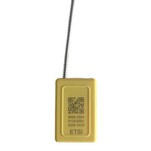
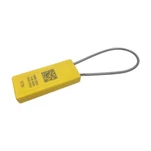
Our RFID bolt seals tag combines a single-use cargo-door locking structure with passive UHF identification. The design supports electronic seal registration and non-contact reading at container yards, logistics gates and controlled freight checkpoints.
RFID Bolt Seals Tag Specifications
The available UHF configuration supports EPC Gen2 logistics systems, serialized seal identification and reader-based container processing.
| Specification | Available Configuration | Project Selection |
|---|---|---|
| Air interface | ISO/IEC 18000-6C, EPC Class 1 Gen 2 | For compatible fixed and handheld UHF readers |
| Chip | Alien Higgs 3 or Higgs 4 | Custom chip options can be reviewed |
| Frequency | 860–960 MHz | Configure for the destination market |
| Operating mode | Passive, battery-free | Activated by the UHF reader field |
| Unique TID | 96 bits | Can be associated with the seal record |
| EPC memory | 96 bits | Suitable for serialized EPC identification |
| User memory | 512 bits | Final capacity depends on the selected chip |
| Reference read range | Up to 10 m | Reader and installation dependent |
| Data retention | Up to 50 years | Electronic memory specification |
| Write endurance | Up to 100,000 cycles | Electronic memory specification |
| Ingress protection | IP65 | For typical outdoor logistics exposure |
| Operating temperature | −30°C to +80°C | Test for the actual transport environment |
| Storage temperature | −30°C to +80°C | Store under controlled conditions |
Bolt Seal Mechanical Construction
The galvanized-steel pin and locking body form a one-time cargo seal while the PC and ABS housing provides space for the UHF transponder.
| Component | Length | Weight | Material |
|---|---|---|---|
| Pin / key | 76 mm ±2 mm | 335 g ±20 g | Galvanized carbon steel with ABS |
| Body / locker | 68 mm ±2 mm | 228 g ±20 g | Galvanized carbon steel with PC and ABS |
From Serialized Seal to Logistics Record
A controlled data relationship allows operators to identify which seal was assigned to a specific container or shipment.
Create the Identity
Generate the approved EPC and visible serial number for each individual seal.
Match the Records
Associate the EPC, TID and printed number with the same production record.
Assign the Shipment
Connect the seal identity with the container, vehicle or freight movement.
Verify at Checkpoints
Read the tag and compare the returned identity with the expected shipment record.
EPC Encoding and Data Matching
We can configure electronic and visible identifiers for bulk container-seal deployment after the data rules are approved.
EPC Programming
- Sequential EPC encoding
- Customer-defined data structures
- Required memory-bank locking
- Read-after-write verification
Visible Identification
- Sequential seal numbering
- Barcode or QR code printing
- Company logo and text
- Custom color identification
Matching Files
- TID and EPC association
- Printed-number matching
- Duplicate EPC checking
- CSV data export
Reader Deployment for Container Operations
The selected reader layout should match the container position, traffic direction, operating speed and required read zone.
| Deployment Area | Recommended Check | Acceptance Target |
|---|---|---|
| Container door | Test the tag in its final locked position | Reliable reads from the approved approach direction |
| Gate portal | Set antenna height, angle and polarization | Read the target container without excessive stray reads |
| Moving vehicle | Run repeated tests at the planned speed | Consistent identification within the available read time |
| Stacked containers | Evaluate metal reflection and adjacent tags | Controlled reads within the defined lane or zone |
| Handheld inspection | Define the normal inspection distance and angle | Quick confirmation of the intended seal |
| Software interface | Map EPC and TID fields to shipment records | Correct status returned for each scanned seal |
RFID Bolt Seal Applications
Port Container Gates
Read serialized seal identities as containers enter, transfer between zones or leave the terminal.
Cross-Border Freight
Associate the applied seal with transport records used at controlled border checkpoints.
Rail Cargo Yards
Support non-contact identification during rail-freight inspection and transfer operations.
Warehouse Dispatch
Register the seal assigned to each loaded container before the shipment is released.
Truck and Trailer Security
Use on compatible cargo-door hardware requiring a single-use bolt locking structure.
Customs Management
Compare the electronic identity, visible seal number and declared shipment record.
Order Configuration Checklist
RFID System Information
- Destination country and frequency band
- Fixed or handheld reader model
- Required operating read distance
- Vehicle speed and gate configuration
- Chip and memory requirements
- EPC and TID usage rules
Production Information
- Visible serial-number format
- Barcode or QR code requirements
- Logo, text and color artwork
- Electronic-to-visible matching rules
- Order quantity and packaging
- Destination and delivery schedule
Related RFID Security Seal Products
Compare the seal structure, attachment point, RFID performance and authorized removal process for your application.
RFID Bolt Seals Tag Questions
What protocol does the RFID bolt seals tag use? +
The listed configuration supports ISO/IEC 18000-6C and EPC Class 1 Gen 2, allowing use with compatible UHF RFID readers and logistics systems.
Is the 10-meter reading distance guaranteed? +
No. Ten meters is a reference maximum. The actual distance depends on reader output, antenna gain, seal orientation, surrounding metal, vehicle speed and regional RF limits.
Can you encode sequential EPC numbers? +
Yes. Sequential EPC encoding can be reviewed using a customer-approved format. We can also associate EPC, TID and visible seal numbers in the production data file.
Can the EPC memory be locked after programming? +
Memory-locking requirements can be configured according to the selected chip. Specify which memory bank should remain writable and which data should be locked.
Why can reads become unstable near stacked containers? +
Container walls and adjacent metal surfaces can reflect or reshape the RF field. Reader antenna position, polarization, output power and read-zone control should be tested at the actual site.
Can the RFID bolt seal be used more than once? +
No. The mechanical bolt seal is designed for one-time locking and authorized removal by cutting. A replacement seal should receive a new identity and shipment record.
What should be tested before a bulk order? +
Test mechanical installation, visible identification, EPC and TID matching, installed reading distance, reader direction, portal speed and software record handling.
What information is needed for a quotation? +
Please provide the application, destination market, reader model, chip requirement, EPC format, printed numbering, artwork, quantity, packaging and destination country.
Plan the Seal Data and Reader Deployment
Send us your application, destination market, reader model, required distance, EPC format, visible numbering, artwork and quantity for configuration review and pricing.
Request an RFID Seal Configuration ReviewHot Tags: rfid bolt seals tag, China rfid bolt seals tag manufacturers, suppliers, factory, rfid authentication seal, rfid seal for cctv systems, rfid seal for footwear, rfid seal for goods, rfid seal for networking equipment, rfid seal for safes