UHF Identification with Evidence of Label Transfer
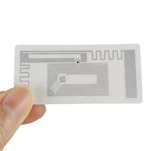
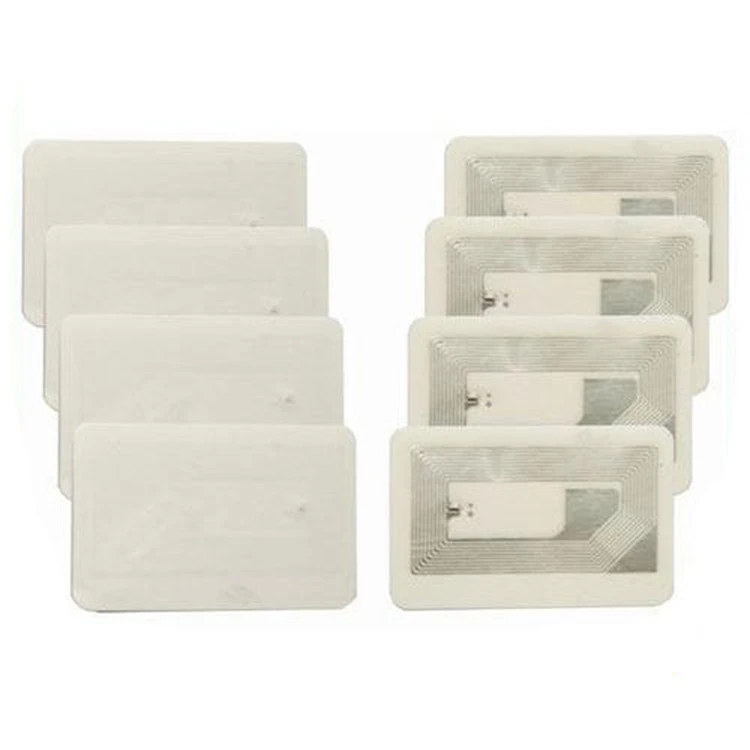
Our Tamper Evident UHF RFID Label is an adhesive passive tag for projects that require long-range identification and a recognizable result after unauthorized lifting or removal. The published 110 × 40 mm configuration uses transparent PET, an M4QT chip and an aluminum antenna.
Unlike an ordinary inventory label, its security value depends on the agreed removal response. We confirm whether the acceptance target is visible material damage, antenna interruption, loss of RFID readability or a combination of these results before production approval.
What Must Be Visible After Tampering?
"Tamper evident" should be converted into an inspection rule that production, receiving and field teams can apply consistently.
Surface Change
The label face or bonded area shows a visible change after lifting.
Antenna Damage
The conductive path is interrupted when removal stress reaches the inlay.
Unreadable Identity
The removed label no longer returns its assigned EPC under the agreed test.
No Intact Transfer
The credential cannot be moved as one functional label to another item.
Published 110 × 40 mm Configuration
| Product type | Tamper Evident UHF RFID Label |
|---|---|
| Finished dimensions | 110 × 40 × 0.2 mm |
| Aluminum antenna | 95 × 16 mm |
| Chip | M4QT |
| Protocol | ISO 18000-6C Gen2 |
| Memory | 96-bit TID/UID; 128-bit EPC; 512-bit user memory; 32-bit access and 32-bit kill passwords |
| Operating frequency | 860–960 MHz |
| Face material | Transparent PET |
| Installation | Adhesive mounting |
| Published read reference | Up to 8 m on plastic, depending on the reader and installation |
| Security characteristic | Tamper-evident / tamper-proof construction |
Placement Determines the Security Result
Apply the label where an opening, substitution or attempted transfer creates the intended physical stress. A convenient flat area is not always the correct security position.
Do not bridge an uncontrolled fold
A sharp edge can bend or detune the antenna during normal handling. Confirm the minimum bend, closure movement and label orientation before approving the position.
| Tagged item | Placement objective | Primary risk | Approval check |
|---|---|---|---|
| Plastic product housing | Keep the assigned identity on one enclosure | Low surface energy or curved edges | Bonding, edge lift, reading and peel evidence |
| Coated carton | Cross the intended opening path | Coating release or uncontrolled fiber tear | Opening damage remains recognizable and repeatable |
| Document pouch | Indicate unauthorized access or label transfer | Flexible movement and liner compatibility | Readability before use and evidence after access |
| Painted enclosure | Link the visible and RFID asset identity | Paint compatibility and metal detuning | Use an approved on-metal direction where necessary |
Applications for Visible Security Evidence
Product and Carton Closures
Connect one EPC and visible serial identity with a closure where opening or label transfer must be detectable.
Single-Assignment Identification
Discourage moving a valid RFID credential from the approved plastic asset or enclosure to another item.
Pouches and Controlled Records
Combine a visible label with UHF identification where access evidence and batch reading are both required.
Visible identification
- Logo and fixed product text
- Sequential serial numbers
- Barcode or QR code
- Batch or destination marking
- Approved print orientation
RFID data control
- EPC format and number range
- User-memory content where required
- Access and kill-password rules
- Locked or unlocked memory state
- Visible-code and EPC mapping file
Approval Workflow for a Repeatable Tamper Result
Set the rule
Define what operators must see or read after tampering.
Confirm the item
Provide surface, coating, shape, label area and environment.
Prepare data
Approve artwork, EPC, memory and mapping requirements.
Test samples
Check adhesion, read zone, peel evidence and data output.
Release order
Confirm proof, roll direction, quantity and packaging marks.
Tamper Evident UHF RFID Label FAQs
Tamper evident describes a recognizable sign that interference occurred. Destructible describes a construction that physically breaks during removal. A project may require either result or both, so the acceptance rule must be stated clearly.
No. It is a published on-plastic reference that depends on the reader and installation. Test the required read zone with the approved label, tagged item, reader antenna, orientation and surrounding materials.
The published reading reference is stated for plastic, not direct metal mounting. Metal can detune a conventional UHF antenna. Use and test a dedicated on-metal configuration when the label must attach to metal.
A normal NFC-enabled phone does not replace an EPC Gen2 UHF reader. Use a compatible UHF handheld, fixed reader or phone-connected UHF accessory selected for the operating frequency and application.
Check intact readability, read-zone coverage, adhesive bonding, edge lift, opening behaviour, visible damage, RFID response after removal, print quality and encoded-data accuracy on the final item.
Send the tagged item, surface, available area, required evidence, reader model, destination country, target range, artwork, encoding rules, quantity, roll direction and packaging requirements.
Set the Tamper-Evidence Acceptance Rule
Send us the tagged item, closure position, required visible and RFID response, reader setup, artwork, encoding data, quantity and destination country.
Hot Tags: tamper evident uhf rfid label, China tamper evident uhf rfid label manufacturers, suppliers, factory, anti tamper rfid substitute, anti tamper rfid upkeep, rfid tamper evident advantage, rfid tamper evident compatibility, tamper proof rfid improvement, tamper resistant rfid provision