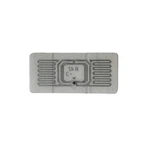
Single-Use UHF Identity That Breaks on Removal
A Destructible UHF RFID Label combines passive UHF identification with a fragile face and antenna structure. When the approved label is peeled from its original surface, the construction is intended to break so the encoded identity cannot be transferred intact to another item.
We configure the label around the tagged surface, required damage pattern, destination frequency, reader setup and print or encoding file. Because those variables affect both adhesion and RF performance, final dimensions, chip, frequency and reading range are confirmed through the approved specification and sample.
Define What "Destructible" Must Mean
A brittle face, a fractured antenna and a visible removal mark are different acceptance criteria. State the required result before samples are prepared.
Face Breakage
The label separates into fragments instead of lifting as one reusable piece.
RF Deactivation
Removal damages the antenna path sufficiently to stop normal RFID response.
Transfer Evidence
The attempted peel leaves a result that operators can identify during inspection.
Order Specification
We use these fields to define a sample that can be tested without carrying assumptions from another UHF label configuration.
Keep the application surface in the inquiry
Surface energy, texture, curvature, coatings, nearby metal and liquid content can change adhesion, antenna tuning and reading distance.
| Label construction | Destructible adhesive UHF RFID label; removal result to be defined |
|---|---|
| Protocol | ISO 18000-6C / EPC Gen2 compatibility to be confirmed |
| Frequency | Select for the destination country and reader system |
| Chip and memory | Choose from the EPC, TID, user-memory and access-control requirement |
| Finished size | Confirm available label area, antenna layout and safe print zone |
| Mounting surface | Provide material, coating, texture, curvature and nearby RF influences |
| Read requirement | Provide reader model, antenna position, orientation and target read zone |
| Visible data | Logo, text, barcode, QR code or sequential number as required |
| RFID data | EPC structure, user data, locking rules and mapping-file format |
| Packing format | Quantity, roll direction, core, labels per roll and carton marking |
Match the Label to the Tagged Item
Product Authentication
Assign one encoded identity to a suitable product or package and make intact transfer more difficult.
- Confirm the label area
- Define inspection evidence
- Map EPC and visible serial data
Asset Assignment
Use a single-assignment label when an asset ID should not be peeled off and moved to another item.
- Test the actual housing
- Check the complete read zone
- Avoid untested direct-metal use
Package Closure Control
Position the label so opening or unauthorized transfer produces the agreed physical and RFID response.
- Check the opening direction
- Test coating and fiber tear
- Keep the antenna away from hard folds
Application and Peel-Test Controls
- Clean and dry the approved application area.
- Apply the label flat without wrinkles or trapped particles.
- Keep the antenna away from unintended sharp edges and folds.
- Use one controlled orientation within each product group.
- Allow the agreed bond time before destructive testing.
- Record intact readability and the result after removal.
Direct mounting on metal
A conventional UHF label can be detuned when attached directly to metal. If the tagged item is metallic, use a construction specifically selected for on-metal operation and test it in the final orientation.
Review the security anti-metal tagPrinting and Encoding as One Controlled Dataset
We can review fixed artwork, variable visible data and RFID encoding together. The production file should define the relationship between each printed identifier and its corresponding EPC or user-memory value.
Artwork file
- Logo and fixed text
- Barcode or QR code type
- Sequential number format
- Print-safe area and orientation
RFID data file
- EPC length and number range
- User-memory fields if required
- Locking and access rules
- Mapping and output-file format
From Application Data to Bulk Order
Define
Provide the tagged item, security risk, environment and required damage result.
Configure
Confirm size, construction, chip, frequency, artwork and encoding rules.
Test
Evaluate bonding, reading, peel damage and data compatibility on samples.
Approve
Sign off artwork, encoded data, roll direction, packing and order quantity.
Destructible UHF RFID Label FAQs
The required result depends on the selected face, antenna and adhesive construction. If permanent RFID deactivation is mandatory, state it as an acceptance criterion and verify it on the actual mounting surface.
Provide the available label area, tagged surface, reader model, antenna position, target read zone, destination country and memory requirement. We will use those inputs to review a suitable configuration for sample testing.
Do not assume a conventional UHF label will work directly on metal. Metal can detune its antenna. Identify the surface in your inquiry so an on-metal construction can be selected and tested where required.
We can review matching visible and RFID data. Supply the number range, EPC format, barcode or QR-code rules, locking requirements and the mapping-file format required by your system.
Check initial reading, read-zone coverage, adhesion, edge lifting, print readability, encoded data and the physical and RFID result after removal. Use the final item, reader and installation orientation.
Send the application, surface, available area, destination country, reader setup, target range, removal requirement, artwork, encoding file, quantity, roll direction and packing needs.
Confirm the Label Against Your Surface
Send us the tagged material, available area, reader setup, required removal response, artwork, encoding rules, quantity and destination country.
Hot Tags: destructible uhf rfid label, China destructible uhf rfid label manufacturers, suppliers, factory, anti tampering rfid purpose, rfid anti tamper market, rfid protection performance, secure rfid industry, tamper proof rfid benefit, tamper proof rfid dependability