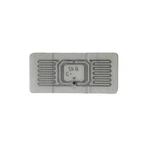
Our RFID tamper-evident sticker tag is a 28 mm adhesive HF label with a transparent fragile face and 26 mm antenna. It uses the ISO 15693 protocol and is designed for one-time product, package or asset identification where removal should damage the tag.
RFID Tamper-Evident Sticker Specifications
This model differs from the ISO 14443A and NTAG-based NFC labels in the same category. Confirm that your reader supports ISO 15693 and the selected chip before approving samples.
| Specification | Listed Configuration | Buyer Confirmation |
|---|---|---|
| Tag diameter | 28 mm | Check the available flat application area. |
| Antenna diameter | 26 mm | Confirm the intended break and removal zone. |
| Chip options | CIT83128 or CID1303AB_1 | Confirm the required chip before encoding and pricing. |
| Protocol | ISO 15693 | Verify compatibility with the intended HF reader. |
| Memory structure | TID/UID, block, user and reserved areas | Submit the intended data structure for confirmation. |
| Operating frequency | 13.0–14.5 MHz | Test performance on the final product or package. |
| Nominal read range | Up to 1.2 cm in an interference-free test | Record the reader model and reading orientation. |
| Face material | Transparent fragile paper | Approve appearance over the selected product surface. |
| Installation | Adhesive backing | Confirm substrate, texture and surface preparation. |
| Security behavior | Tag damage after peeling or removal | Approve the one-time removal result on samples. |
Memory confirmation: The product source identifies the available memory areas but does not state their exact capacities. Confirm the selected chip and intended encoded content before production.
Confirm ISO 15693 Reader Compatibility
Do not select this tag only because it operates at HF. The reader must support its protocol and chip, and the complete application must be tested at the required distance.
HF Frequency
The tag operates in the 13.0–14.5 MHz range, but frequency alone does not establish reader compatibility.
ISO 15693
Confirm that the reader firmware and application support the ISO 15693 command set required by the selected chip.
Reader Model
Provide the model number, antenna arrangement and expected inspection procedure when requesting samples.
Mobile Reading
Do not assume universal smartphone support. Test the specific mobile devices if phone reading is required.
Protocol distinction: ISO 15693 is not interchangeable with every ISO 14443A NFC workflow. A reader that works with an NTAG label may not support this sticker without the correct protocol capability.
Use the Transparent Face Without Hiding the Surface
The transparent fragile face can reduce visual obstruction on branded packaging or equipment, but the final appearance depends on the underlying color, texture and printed content.
Product Packaging
Apply the sticker across an opening or access point while keeping more of the original package graphics visible.
Electronics and Equipment
Cover an enclosure seam, screw or service access point where unauthorized opening should damage the identifier.
Service and Warranty Control
Use the tag as one inspection element for assets that should not be opened or reassigned without authorization.
Appearance approval: Transparent material does not make the antenna or chip completely invisible. Review applied samples over the actual package color and graphics before confirming the design.
Match the Sticker to the Protected Surface
| Application Surface | Primary Check | Removal Test | Potential Risk |
|---|---|---|---|
| Coated carton | Lamination, varnish and fiber strength | Check adhesion and tag damage after peeling | Weak bonding to smooth coatings |
| Plastic housing | Plastic type, texture and curvature | Inspect lifting and antenna damage | Low-energy plastic may reduce adhesion |
| Glass surface | Cleaning, moisture and temperature | Condition before the controlled peel test | Contamination under the adhesive |
| Curved component | Radius and full adhesive contact | Monitor edge lift after conditioning | Spring-back around the 28 mm sticker |
| Metal enclosure | Conductive material under the antenna | Measure reading on the final assembly | HF antenna detuning or failed reads |
Metal warning: Do not assume that this transparent sticker can operate directly on metal. Submit the complete mounting structure so a suitable tag construction can be evaluated.
Approve One-Time Removal Performance
The label should survive application and intended handling but sustain irreversible damage when peeling or unauthorized opening occurs.
Apply
Clean the surface and install the sticker using the planned application pressure and orientation.
Condition
Expose applied samples to the expected storage and handling conditions before evaluation.
Read
Verify intact tags using the approved ISO 15693 reader, distance and orientation.
Remove
Peel the label and inspect physical damage, RFID response and the possibility of intact transfer.
Build a Reliable Inspection Workflow
| Inspection Result | Physical Condition | RFID Response | Recommended Action |
|---|---|---|---|
| Intact and accepted | Fully bonded with no visible damage | Expected identifier reads correctly | Continue normal processing |
| Misapplied | Lifted, folded or incorrectly positioned | May remain readable | Reject as an installation defect |
| Removed or opened | Fragile face or antenna is damaged | Tag does not respond as an intact tag | Record for tamper investigation |
| No read without damage | No clear visible removal evidence | Reader cannot obtain the expected identifier | Retest and quarantine if unresolved |
| Identifier mismatch | Label appears intact | Read data differs from the expected record | Hold for record verification |
No-read limitation: A failed read does not independently prove unauthorized removal. Reader incompatibility, metal interference, installation damage and incorrect orientation must also be excluded.
Printing, Encoding and Batch Records
We can review the visible identifier and chip-data requirements after the selected chip, usable memory and application workflow are confirmed.
Visible Identification
- Logo or compact product text
- Barcode or QR code
- Serial or batch number
- Required transparent print treatment
HF RFID Data
- Product or asset identifier
- Required user-memory content
- Encoding verification method
- Reader command requirements
Record Matching
- UID and printed-code relationship
- Variable-data input format
- Duplicate-record control
- Finished encoding data file
Information Needed for Tag Selection
Application Details
- Package, asset or enclosure material
- Available area and protected access point
- Surface texture, coating and curvature
- Expected storage and handling environment
- Any nearby metal or conductive material
System and Order Details
- HF reader model and supported protocols
- Required chip and encoded content
- Artwork and variable-data format
- Required quantity and destination country
- Expected intact and removed tag results
Related Tamper-Evident RFID Tags
Compare protocol, chip, face material, label diameter and reader requirements before selecting another HF or NFC tamper tag.
RFID Tamper-Evident Sticker Questions
Is this sticker compatible with ordinary NFC phone scanning? +
This model uses ISO 15693 rather than the ISO 14443A protocol used by many common NFC labels. Do not assume universal phone compatibility; test the intended phones or use a confirmed ISO 15693 reader.
What is the difference between the 28 mm tag and its 26 mm antenna? +
The 28 mm measurement is the finished sticker diameter, while 26 mm describes the antenna diameter inside it. Confirm the production drawing before preparing artwork or application tooling.
What happens when the transparent sticker is peeled off? +
The fragile material and internal antenna are designed to become damaged during removal, preventing the tag from being transferred and reused as an intact functional identifier.
Can the sticker be used directly on metal assets? +
Direct metal placement can interfere with a standard HF antenna. Provide the asset material and mounting position so the required construction can be evaluated with the intended reader.
How should we choose between the two listed chip options? +
Provide the reader model, required identifier, memory content and software commands. We will review these requirements against the CIT83128 or CID1303AB_1 configuration before quoting.
Can printed codes be matched with RFID identifiers? +
We can review variable printing, RFID encoding and identifier-data output requirements. Supply the source file, matching rules and verification procedure when requesting a quotation.
What information is needed for sample evaluation? +
Please provide the mounting surface, protected access point, reader model, required chip, encoded data, artwork, order quantity, destination country and expected removal result.
Confirm the Chip, Reader and Removal Result
Send us your mounting surface, application position, ISO 15693 reader, required chip, encoded-data structure, artwork and order quantity for sample evaluation and pricing.
Request an ISO 15693 Tag ReviewHot Tags: rfid tamper evident sticker tag, China rfid tamper evident sticker tag manufacturers, suppliers, factory, rfid anti tamper demand, rfid anti tamper price, rfid protection supply, rfid tamper evident market, tamper proof rfid lifespan, tamper resistant rfid need