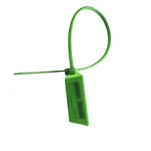
Our Wine Bottle RFID label combines a G2IL+ UHF inlay, transparent PET construction and adhesive tamper-sensing format in a 75 × 58 mm label. It is designed for bottle-level identification during winery dispatch, distributor receiving, bonded storage, inventory counting and controlled opening workflows.
Wine Bottle RFID Specifications
This configuration supports long-range UHF identification and bottle-level EPC management for wine, whiskey, liquor and other packaged beverages.
| Specification | Available Configuration |
|---|---|
| Tag dimensions | 75 × 58 × 0.2 mm |
| Antenna dimensions | 71 × 54 mm |
| Chip | G2IL+ |
| Protocol | ISO 18000-6C Gen2 |
| Identity memory | 96-bit TID/UID |
| EPC memory | 128-bit EPC/Block |
| User memory | 0 bit |
| Reserved functions | Access and kill password fields |
| Operating frequency | 902–928 MHz |
| Material | Dual silicon and transparent PET liner |
| Reference read range | Up to 6 m in air, reader dependent |
| Installation | Adhesive backing |
| Security structure | Tamper-proof with detection sensor |
Identify Bottles Across Distribution Operations
We configure the label for operations that need faster bottle or case handling without relying on smartphone NFC taps.
Winery Dispatch
Associate each encoded bottle with its SKU, vintage, batch and outbound shipment before the order leaves production.
Distributor Receiving
Use fixed or handheld UHF readers to compare received bottle identities with the expected delivery record.
Bonded Warehousing
Record movements between controlled storage areas while maintaining a bottle-level relationship with cases and pallets.
Retail Allocation
Assign serialized bottles to stores, hospitality accounts or regional distributors before final delivery.
Connect Bottle, Case and Shipment Records
A structured EPC allocation makes it possible to reconcile individual bottles after cases are opened, split or repacked.
| Record Level | Typical Data Relationship | Operational Use |
|---|---|---|
| Bottle | EPC linked with SKU, vintage, batch and serial record | Individual identification and exception handling |
| Case | Case identity linked with its packed bottle EPC list | Receiving, picking and case-content reconciliation |
| Pallet | Pallet record associated with multiple cases | Warehouse movement and shipment staging |
| Shipment | Order or delivery record linked with dispatched units | Dispatch confirmation and receiving comparison |
| Opening event | Sensor state associated with the bottle identity | Record a detected seal-state change when supported |
Plan the Bottle Reading Environment
Conveyor Station
- Define bottle orientation and conveyor speed
- Control the reader antenna coverage zone
- Separate adjacent production batches
- Test read duplication and missed-read rules
Warehouse Portal
- Confirm pallet and case arrangement
- Set the required portal read boundary
- Evaluate liquid-filled bottle interference
- Filter tags outside the intended shipment
Handheld Inventory
- Select the approved UHF reader model
- Define aisle and shelf scanning methods
- Set expected inventory response times
- Reconcile unread bottles through exception scans
Place the Label Around the Protected Opening
Bottle geometry, liquid, foil, metal closures and nearby bottles can influence UHF performance, so the final position should be approved on the complete package.
Neck-to-Cap Bridge
Apply the label across the bottle neck and closure when the project needs the seal structure to be stressed during opening.
Outer Packaging Bridge
Use the label across a carton or presentation-box opening when direct bottle placement is restricted by decoration or closure design.
Bottle Body Position
Reserve a smooth application area and test the tag orientation against the intended conveyor, portal or handheld reader.
Printing, Serialization and Encoding
We can coordinate the visible bottle information with the electronic EPC record supplied for production.
Printed Information
- Wine brand and product name
- Vintage, batch or region text
- Barcode or QR code
- Variable serial number
RFID Encoding
- Customer-defined EPC structure
- Unique bottle-level encoding
- Write and read verification
- Password configuration when specified
Production Output
- Printed-code and EPC association
- Duplicate identifier screening
- Encoding result file
- Rejected-tag replacement control
Bottle RFID Deployment Process
Define
Specify the bottle, closure, packing format, reader location and required data relationship.
Configure
Confirm label artwork, EPC rules, printed variable data and application orientation.
Test
Evaluate applied bottles in the intended case, pallet, conveyor and warehouse arrangements.
Deploy
Approve the production data file, reading procedure and exception-handling process.
Information Required for Configuration
Bottle and Packaging
- Bottle diameter, material and liquid type
- Cap, cork, foil and capsule construction
- Available label application area
- Case quantity and bottle arrangement
- Storage and transport conditions
RFID and Data
- Destination market and frequency requirement
- Fixed or handheld reader models
- EPC allocation and database format
- Artwork and variable-printing data
- Annual quantity and delivery destination
Wine Bottle RFID Questions
Can the label be read through a full wine case? +
Performance depends on bottle orientation, liquid, case construction, tag position, reader antennas and surrounding products. We recommend testing the actual packed case rather than applying the open-air distance directly.
Does the six-meter range apply to every installation? +
No. Six meters is a reference result in an air environment. The installed range varies with the reader, antenna, power setting, bottle contents, tag orientation and nearby materials.
Can consumers read this tag with a smartphone? +
This configuration is a 902–928 MHz UHF RFID label and normally requires a compatible UHF reader. Standard NFC smartphone reading is not the intended reading method.
What does the detection sensor provide? +
The tag structure can support detection of a seal-state change. The reader and management software must interrogate, interpret and store that state for it to become an operational opening record.
Can each bottle receive a different EPC? +
Yes. We can encode bottle-level EPC values from an approved data file and associate them with visible serial numbers, barcodes or QR codes when required.
Is this frequency suitable for every destination country? +
The listed configuration operates at 902–928 MHz. Provide the destination countries and reader requirements so the regional frequency plan can be confirmed before production.
What is required for a quotation? +
Please provide the bottle and closure construction, application position, case arrangement, destination market, reader model, artwork, EPC data requirements, quantity and delivery country.
Configure RFID for Your Wine Distribution Process
Send us your bottle and closure details, packing arrangement, reader environment, destination frequency, artwork, encoding requirements and quantity for configuration review and pricing.
Request a Wine Bottle RFID ReviewHot Tags: wine bottle rfid, China wine bottle rfid manufacturers, suppliers, factory, rfid seal for anti-virus software, rfid seal for attenuators, rfid seal for composting, rfid seal for landfill, rfid seal for logistics, rfid seal for watch