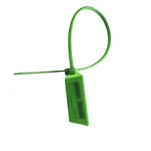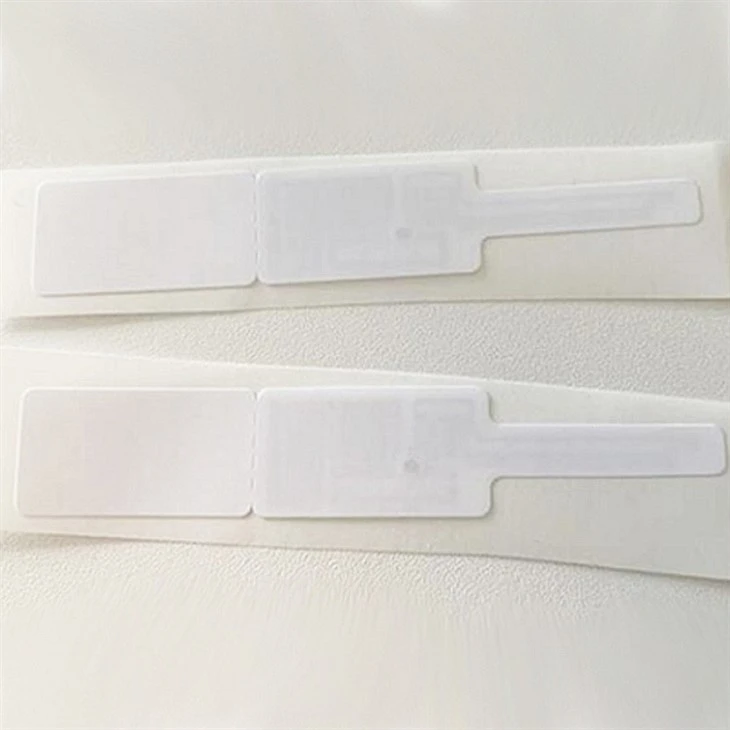
Our RFID seal tag for anti-theft projects combines a narrow coated-paper seal with a CAB0 UHF chip. Applied across a protected opening or removal-sensitive position, it can support product identification, controlled checkpoint reads and investigation of missing or physically altered items.
RFID Anti-Theft Seal Tag Specifications
Confirm the product surface, protected point, frequency region and reader system before approving the final seal configuration.
| Specification | Listed Configuration | Project Requirement |
|---|---|---|
| Tag dimensions | 84 × 15 × 0.2 mm | Confirm the available sealing area. |
| Antenna dimensions | 51.2 × 12.24 mm | Position the antenna across the protected point. |
| Chip | CAB0 | Define EPC and user-memory requirements. |
| Protocol | ISO 18000-6C Gen2 V2 | Confirm UHF reader compatibility. |
| TID | 112 bits | Define whether TID capture is required. |
| EPC memory | 196 bits | Submit the electronic identity structure. |
| User memory | 512 bits | Specify the additional project data. |
| Reserved memory | 112 bits | Confirm the required security settings. |
| Frequency | 902–928 MHz | Verify suitability for the destination market. |
| Face material | Printable coated paper | Provide artwork and visible codes. |
| Installation | Pressure-sensitive adhesive | Identify the substrate and surface coating. |
| Reference read range | Up to 2 m, reader dependent | Validate the operational checkpoint. |
Use Physical Sealing and RFID Events Together
The label supports a layered loss-prevention process rather than acting as an independent alarm or guaranteed theft barrier.
Seal
Apply the label where opening or removal should damage the paper or antenna structure.
Identify
Associate the EPC and optional TID with the protected item or package record.
Detect
Use a compatible reader at a controlled checkpoint to capture the tag event.
Investigate
Compare reader events, expected status and physical seal condition when an exception occurs.
Match the Seal to the Protected Item
Jewelry Packaging
Bridge a box, pouch or presentation-card opening without attaching the tag directly to sensitive jewelry surfaces.
Luxury Goods
Place the seal across a protected package closure and test all leather, coated or textured surfaces.
Apparel and Accessories
Apply to the hang tag or package when direct adhesive contact with the product is unsuitable.
Optical Products
Use a case or tag position that avoids lenses, metal frames and areas exposed to repeated handling.
Electronics Packaging
Check metal, batteries and internal components before approving the UHF label position.
Exhibition Items
Assign the tag to an exhibit or protective enclosure and define authorized movement procedures.
Define Checkpoint Rules Before Deployment
| Checkpoint Event | Expected Condition | Possible Exception | Operational Response |
|---|---|---|---|
| Goods receipt | Expected EPCs match the delivery | Missing or unexpected identity | Hold the affected shipment for reconciliation |
| Stock placement | Item enters the assigned location | Wrong zone or unrecorded movement | Verify the item and location record |
| Inventory count | Captured identities match system stock | Missing, duplicate or unreadable tag | Perform an individual physical check |
| Authorized sale | Item status changes before exit | Sale and tag status do not agree | Resolve the record before release |
| Controlled exit | Only authorized items pass the reader | Active unexpected identifier appears | Apply the buyer's alert and review procedure |
| Return inspection | Item identity and seal condition agree | Damaged seal or record mismatch | Quarantine the item for investigation |
Test Removal Evidence on the Actual Surface
Adhesion and Removal Test
- Clean the production package surface
- Apply with planned pressure and dwell time
- Test smooth, coated and textured substrates
- Attempt controlled peeling and transfer
- Inspect paper, antenna and adhesive damage
RFID Checkpoint Test
- Use the intended reader and antenna models
- Test one item and grouped merchandise
- Measure missed and unintended captures
- Repeat after controlled seal removal
- Document the accepted reader settings
Configure Alerts Around Reliable Reader Events
Receiving Exception
Flag an identity that is missing from or unexpected in the approved delivery record.
Unauthorized Movement
Compare a checkpoint read with the item's current permission and location status.
Exit Exception
Trigger the buyer's workflow when an active item passes a controlled exit without authorization.
Seal Damage
Route items with visible removal evidence or unexpected electronic response to manual inspection.
Duplicate Record
Hold identifiers that conflict with another active item or encoding record.
Unexpected Return
Compare the returned tag with the original sale, assignment and seal history.
Printing, Encoding and Record Matching
Visible Seal Data
- Brand and product information
- Human-readable seal number
- Barcode or QR code
- Batch or location reference
Electronic Data
- 196-bit EPC structure
- Optional 512-bit user data
- TID capture requirements
- Required memory security settings
Record Management
- Printed number and EPC association
- Duplicate-identifier screening
- Encoding verification output
- Rejected-label reconciliation
Information Required for Configuration
Protected Item Details
- Product, package and sealing point
- Surface material, coating and curvature
- Nearby metal, liquid or electronics
- Expected handling and removal risk
- Required physical tamper result
RFID System Details
- Destination country and frequency
- Reader, antenna and software models
- Checkpoint and alert workflow
- EPC, TID and user-memory data
- Artwork, quantity and delivery destination
Related RFID Security Labels
Compare physical sealing, UHF reading distance, package fit and checkpoint requirements before selecting another security tag.
RFID Anti-Theft Seal Tag Questions
Does the RFID seal prevent every theft attempt? +
No. The seal can support product identification, physical tamper inspection and controlled reader alerts. Effective loss prevention also requires suitable placement, software rules, staff procedures and physical security.
Does the passive RFID tag provide real-time location? +
No. The passive tag has no GPS or independent communication. Its identity is captured only when energized and read by a compatible UHF reader.
Can the tag activate an exit alarm? +
An alarm workflow requires compatible readers, software and defined authorization rules. The tag alone does not contain a siren or independently generate an alert.
Can the seal be transferred to another product? +
The coated-paper seal is intended to show damage when removed from a suitable surface. Transfer resistance must be verified through applied tests on the actual package.
Can several tagged products be read together? +
UHF supports multi-tag reading, but product materials, orientation, density and reader settings affect capture performance. Test the actual merchandise arrangement.
Is the listed two-meter reading distance guaranteed? +
No. Reader power, antenna gain, orientation, metal, liquid, interference and the installed package can increase or reduce the practical read distance.
What information is required for a quotation? +
Please provide the protected product, package surface, sealing point, frequency region, reader system, checkpoints, alert workflow, EPC data, artwork, quantity and destination country.
Configure the RFID Seal and Checkpoint Workflow
Send us the protected item, sealing point, surface material, reader system, checkpoint rules, EPC data, artwork and quantity for configuration review and pricing.
Request an Anti-Theft Seal ReviewHot Tags: rfid seal tag for anti theft, China rfid seal tag for anti theft manufacturers, suppliers, factory, rfid seal for demodulators, rfid seal for firewalls, rfid seal for intrusion detection systems, rfid seal for mining, rfid seal for tobacco, Tamper RFID Seal Labels