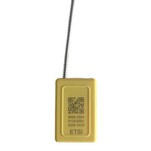
Active RFID tags are battery-powered radio frequency identification tags that actively transmit wireless signals. Compared to passive RFID tags, active tags offer longer read ranges, stronger signal capabilities, and a wider range of features. They are widely used in scenarios such as asset tracking, personnel location, vehicle management, and industrial environment monitoring.
1. Working Principle of Active RFID Tags
Active RFID tags have a built-in battery and transmit data signals to a reader in real time, without relying on the reader for power. This enables stable communication over longer distances (up to tens to hundreds of meters) and can operate independently without reader input.
Based on their transmission mode, active RFID tags are divided into two categories:
Periodic tags: These tags automatically transmit data at set intervals and are suitable for periodic data collection scenarios;
Interactive tags: These tags return data after communication with a reader is triggered and are suitable for command-response applications.
2. Features of Active RFID Tags
Ultra-Long Read Range: These tags typically have a read range of 10 to 100 meters or even longer, covering large areas and reducing the number of reader deployments.
Real-time Positioning and Monitoring: Combined with positioning algorithms, active tags enable high-precision tracking of people or objects for security monitoring and route optimization.
Sensor Expansion Support: Built-in sensor modules for temperature, humidity, vibration, and light enable integrated "identification + monitoring" data acquisition.
Strong Anti-Interference Capability: Maintains stable communication even in dense metal and complex electromagnetic environments, making it suitable for industrial and outdoor scenarios.
Large Data Storage: Tags can store more data and support encrypted transmission, enhancing security and reliability.

3. Typical Application Scenarios
Asset Tracking and Management: Used for tracking the location of high-value equipment, logistics pallets, and storage containers, enabling asset visualization and loss prevention.
Personnel Management: Used in environments such as mines, tunnels, hospitals, and factories for personnel entry and exit management, tracking movements, and emergency location tracking.
Vehicle Identification and Management: Used for parking lot access control, highway toll collection, and fleet scheduling, enabling automatic identification and recording.
Environmental Monitoring and Cold Chain Tracking: Integrated sensing capabilities can monitor parameters such as temperature, humidity, and vibration for refined environmental control.
4. Implementation Challenges and Development Trends
Although active RFID tags offer powerful capabilities, they still face several challenges:
Higher cost: Hardware and maintenance costs are higher than with passive tags;
Battery lifespan limitations: Regular battery replacement or energy management design considerations are required;
Complex system planning: This involves reader layout, network backhaul, and backend system integration.
Future development trends for active RFID tags will focus on lower power consumption, higher integration, longer lifespan, and integration with positioning technologies such as LoRa, promoting their wider application in smart cities and industrial digitalization.