RFID (Radio Frequency Identification) is a technology that uses radio waves for contactless automatic identification and data exchange. It is widely used in scenarios such as supply chain, warehousing, logistics, retail anti-counterfeiting, and asset management. Compared to traditional barcodes, RFID eliminates the need for manual scanning and enables long-distance, batch identification, significantly improving efficiency and automation.
What does an RFID system consist of?
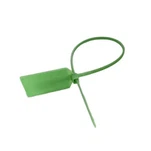
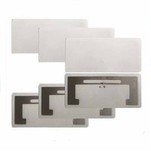
First, the RFID tag, which is attached to an item and contains a chip and antenna that stores the item's identity or business information.
Second, the reader, which transmits radio frequency signals to activate the tag and is responsible for reading or writing tag data.
Third, the backend system, which receives data uploaded by the reader and integrates with the company's ERP, WMS, and other systems to enable tracking, inventory, and traceability.

How does RFID work?
The core principle of RFID is to use radio waves for electromagnetic coupling and data exchange. The general process is as follows:
1. The reader transmits a radio frequency signal.
2. The passive tag draws power from the external signal to activate.
3. The tag transmits its ID or data.
4. The reader receives the data.
5. The backend system executes identification, recording, or control logic.
The entire process is contactless. Radio waves can penetrate cardboard or plastic for identification, and can read a large number of tags simultaneously.
Differences between RFID and barcodes
Compared to barcodes, RFID does not require "aimed" scanning and can be read from a distance. Barcodes can only be read one at a time, while RFID can read multiple tags at once. Barcodes can only be printed once and cannot be modified, while RFID can be written and updated. Barcodes cannot be scanned if obscured, while RFID can read through cardboard or packaging. In terms of cost, RFID tags are more expensive per unit, but this comes at the cost of improved efficiency and visibility.
Typical RFID Use Cases
In warehousing and logistics, it's used for shipping and receiving identification, inventory location tracking, and automated inventory counting; in supply chain anti-counterfeiting, it's used for unique product identification and traceability; in manufacturing, it's used for work-in-process tracking and production line cycle control; in asset management, it's used for the full lifecycle management of IT equipment or pallets; and in retail, it's used for in-store loss prevention and high-speed inventory counting.
RFID uses radio frequency interaction between a reader and a tag to achieve contactless, highly efficient data identification and writing, making it a more advanced automatic identification medium than traditional barcodes. With declining hardware costs and deepening integration with digital systems, RFID is becoming a foundational technology for automation and supply chain visibility across various industries.