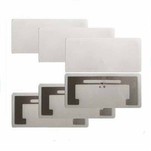
In applications such as vehicle management, product anti-counterfeiting, asset tracking, and supply chain management, RFID tags must not only provide identification but also ensure that they cannot be easily replaced or reused after installation. Standard RFID tags may, in some cases, remain readable even after being peeled off. If such a tag is transferred to another item or piece of equipment, the backend system might still identify it as the original, legitimate object-a scenario that poses risks to asset management and authentication.
Tamper-proof RFID tags are designed specifically to address this issue. Through the use of specialized antenna structures, fragile materials, or anti-transfer adhesive designs, these tags sustain irreversible physical damage when subjected to forced removal, dismantling, or transfer, thereby minimizing the likelihood of reuse.
1. What is a Tamper-Proof RFID Tag?
A tamper-proof RFID tag is an electronic RFID tag equipped with anti-tampering or anti-transfer capabilities. Unlike standard RFID tags, which primarily store and transmit identification data, these tags incorporate physical anti-tampering mechanisms into their design. Such tags typically consist of an RFID chip, an antenna, a substrate, an adhesive layer, and a protective surface layer. Depending on the specific application requirements, designs may utilize fragile antennas, specialized adhesive layers, layered structures, or destructible substrates.
Once a tag is properly installed on a surface-such as glass, plastic, or metal-a secure, fixed connection is established between the tag and the object. Any attempt to remove the tag intact will result in consequences such as a broken antenna, a damaged substrate, or a failure in the chip's connection. It is important to note that "tamper-proof" does not mean the tag is impossible to remove; rather, the design ensures that any removal attempt causes detectable damage, making it difficult to transfer the tag intact and continue using it.
2. How Does RFID Anti-Tampering Technology Work?
Different products employ various anti-tampering solutions. Common technical principles include the following:
Antenna Destruction: This is one of the most common anti-transfer design approaches. Tag antennas are designed with specific patterns or fragile structures; if a tag is forcibly removed, the antenna circuitry breaks, preventing the chip from receiving the necessary RF energy or completing data communication. Even if the tag appears intact from the outside, damage to the antenna circuit can render it unreadable.
Fragile Substrate Design: These tags utilize fragile PET, specialized films, or other materials prone to destruction. If external force is applied to remove the tag from its original surface, the substrate may split, tear, or leave residue, making it impossible to re-apply the tag in its original, complete form.
Anti-Transfer Adhesive Structure: By customizing the adhesive layer and bonding structure, the bond strength between the tag and the target surface is increased. Attempting to peel off the tag may cause delamination, adhesive residue, or localized damage, making it difficult to transfer the tag intact.
3. Why can't an RFID tag be read again after it has been peeled off?
The proper functioning of an RFID tag relies on an electrical connection between the chip and the antenna. In the case of a UHF RFID tag, for example, the reader emits an RF signal; the tag's antenna captures this energy and transmits data back via backscatter.
When an anti-tamper structure is compromised, the following may occur:
- Antenna breakage: RF energy can no longer be transmitted effectively, causing the tag's communication capability to degrade or fail entirely.
- Damage to the chip connection: The link between the chip and the antenna is severed, preventing the tag from responding to the reader.
- Structural delamination: The internal conductive structure of the tag is damaged, preventing it from maintaining its original electrical performance.
- Invalidation of tag identity: The original tag can no longer be read, and the backend system can flag it as being in an "abnormal" state based on established business rules.
It is important to distinguish between these concepts: physical damage to a tag does not mean the EPC data is automatically deleted. Data-such as the EPC-may still reside within the chip, but because the antenna or the connection structure is damaged, the reader can no longer access it. Therefore, the security of anti-tamper RFID tags is derived primarily from physical anti-transfer mechanisms, rather than relying solely on data encryption.
4. What are the differences between two common types of anti-tamper RFID tag structures?
In practical applications, the effectiveness of anti-tamper features does not depend solely on the RFID chip model; it is largely determined by the tag's antenna design, substrate structure, and installation method.
Consider two common types of UHF anti-tamper tags:
Option 1: White PET Anti-Tamper Tags
These are suitable for applications requiring the printing of product information, asset identification numbers, or vehicle details. The white surface facilitates printing and encoding, while the fragile (frangible) structure ensures that any attempt to remove the tag renders it unusable or prevents its transfer to another object.
Option 2: Transparent PET Anti-Tamper Tags
These are ideal for installations where aesthetics are a priority, such as on vehicle windshields. The transparent substrate minimizes visual impact while maintaining full RFID functionality.
Both options utilize UHF RFID technology; however, the specific antenna configuration, chip selection, and level of anti-tamper protection must be tailored to the requirements of the product design. One cannot determine the anti-tamper performance based solely on whether the substrate is transparent or white.