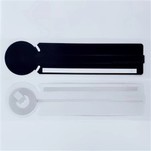
RFID Wire Seal for Air Cargo ULD
Air cargo ULDs (Unit Load Devices) move through fast, multi-party handling environments: airlines, ground handling agents, freight forwarders, and airport security checkpoints. Speed is critical-but so is integrity. Unauthorized opening, cargo substitution, and weak handover records can cause claims, compliance issues, and operational disruption.
RFID wire seals help secure air cargo ULDs by combining tamper-evident physical sealing with digital identity verification for faster, cleaner chain-of-custody control.
1) Why ULD Security Needs RFID Wire Seals
Air cargo workflows typically include:
consolidation at forwarder warehouse
transport to airport terminal
security screening and acceptance
ramp handling and aircraft loading
arrival handling and deconsolidation
final delivery handover
Common risks:
ULD door or net access without authorization
cargo substitution or pilferage
disputes about where tampering occurred
weak documentation across handlers
time pressure causing skipped checks
RFID seals make ULD checks faster and reduce manual errors.
2) How RFID Wire Seals Work on ULDs
Step 1: Seal assignment
A serialized RFID wire seal is assigned to the ULD access point (door latch, net closure, or lock ring). The seal ID is linked to:
ULD number
airway bill or shipment reference
origin and destination airport
handler responsibility chain
Step 2: Physical sealing
The wire is threaded through the closure points and locked. Opening requires cutting or breaking the wire, providing clear tamper evidence.
Step 3: Scan verification at checkpoints
At key points (acceptance, screening, loading, arrival), teams scan the seal to record:
seal ID
time and location
operator/handler ID
integrity status
Step 4: Authorized opening and resealing
When authorized access is needed, seal breakage is documented, and a new seal is applied with linkage to the original record.
3) Key Benefits for Air Cargo Operations
A) Faster security verification
Scanning RFID is faster than manually reading and writing down long seal numbers.
B) Stronger chain-of-custody traceability
Scan logs provide evidence across multiple handlers and terminals.
C) Reduced disputes and claims
When an integrity event occurs, records show last intact checkpoint, improving investigation efficiency.
D) Better handling discipline without slowing throughput
RFID-based checks can be integrated into routine scanning steps.
4) Choosing RFID Wire Seals for ULD Scenarios
A) Wire strength and lock design
choose wire diameter based on risk and ULD closure points
ensure anti-reseal lock structure
B) RFID technology selection
NFC for close-range verification by staff (easy intentional checks)
UHF for faster processing in high-throughput areas or batch verification
C) Marking and serialization control
unique IDs
durable laser marking
batch mapping files for acceptance and audit records
5) Recommended SOP for ULD Sealing
Mandatory checkpoints
Forwarder consolidation sealing
Airport acceptance verification
Security screening confirmation
Ramp loading verification
Arrival receiving verification
Deconsolidation authorized opening
Standard exceptions
broken seal before arrival
ID mismatch
missing seal
unreadable seal
Each exception should trigger an incident record and controlled resealing.
6) Common Mistakes to Avoid
Mistake 1: Seal without data linkage
Fix: link seal ID to ULD number and AWB in your process.
Mistake 2: No checkpoint ownership
Fix: assign who scans at acceptance, screening, and arrival.
Mistake 3: Weak replacement control
Fix: reseal only through controlled process, link old/new seal IDs.
Mistake 4: Using the wrong RFID type for the checkpoint
Fix: choose NFC for person-based checks, UHF for throughput-based checks.
RFID wire seals improve air cargo ULD integrity by combining tamper-evident physical security with digital checkpoint verification. With a clear SOP, serialization governance, and correct RFID type selection, airlines and handlers can reduce cargo risk while maintaining fast throughput.
Need RFID wire seals for air cargo ULD security?
Share your ULD handling process, checkpoint flow, and preferred verification method (NFC or UHF). We can recommend suitable seal options, provide samples, and support serialized bulk supply for stable deployment.