The manufacturing industry is undergoing a transformation from traditional production models to intelligent manufacturing models. In the past, companies mainly relied on manual registration, paper documents, and barcode scanning for production management. While this method was sufficient for small-scale production, with the increase in product variety, the complexity of production processes, and the increasing demands for supply chain collaboration, traditional management methods have gradually revealed problems such as untimely data collection, tracking difficulties, and high labor costs.
The application of RFID (Radio Frequency Identification) technology provides manufacturing companies with a more efficient way to collect data. By attaching RFID tags to raw materials, production equipment, tooling fixtures, semi-finished products, and finished products, companies can obtain real-time data from the production site, enabling upgrades in material tracking, process management, quality control, and equipment management.
RFID Improves Production Transparency
In modern manufacturing environments, the production process often involves multiple stages, including raw material warehousing, processing and manufacturing, quality inspection, packaging, and transportation. If companies cannot accurately grasp the status of products at each stage, risks such as production delays and inventory chaos can easily occur. RFID technology can assign a unique identity to each item. Compared to traditional barcodes, which require close-range, one-by-one scanning, RFID tags can be automatically read using radio frequency signals. Even if the tag is obscured or installed on a mobile device, data collection can be completed quickly.
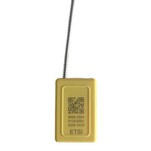
For example, in the machinery manufacturing industry, companies can install RFID industrial tags on parts pallets or processed workpieces. As materials pass through different production areas, the system automatically records their current location and processing status, allowing managers to monitor production progress in real time.
RFID Optimizes Material Management
One of the most common problems for manufacturing companies is the difficulty of managing materials on the production floor. Due to the large number and complexity of parts, workers often spend a lot of time searching for the corresponding materials, and production may even be halted due to incorrect material information. By deploying an RFID management system, companies can monitor the location, quantity, and usage status of each batch of materials in real time. Once raw materials enter the production line from the warehouse, the RFID system automatically records information and connects to the company's ERP or MES system for data synchronization.
RFID Facilitates Automated Control of Manufacturing Processes
One of the core goals of smart manufacturing is to reduce human intervention and enable production equipment to operate automatically based on real-time data. As a crucial technology connecting products and production systems, RFID can provide accurate data sources for automated production. On automated production lines, RFID readers can be installed at critical workstations. When a product passes through a processing area, the system automatically reads the information from the RFID tag and determines the necessary processing flow.
RFID Enhances Traceability Capabilities
As customers' demands for product quality continue to rise, manufacturing companies need to establish more comprehensive product traceability systems. Especially in industries such as automotive parts, medical equipment, aerospace manufacturing, and precision electronics, complete production records have become a crucial component of quality management. RFID can record the complete lifecycle information of a product from raw materials to final delivery. Each RFID tag can be associated with data such as product batch, production time, processing equipment, test results, and operators.
When product quality anomalies occur, companies can quickly pinpoint the source of the problem, rather than searching through numerous production records. This rapid traceability capability not only reduces quality risks but also helps companies meet industry regulatory and customer audit requirements.
RFID Improves Factory Asset and Equipment Management
Beyond production material management, RFID plays a vital role in manufacturing asset management. Factories typically possess numerous production tools, molds, testing equipment, and containers. Without effective management, problems such as equipment loss, missing locations, and incomplete maintenance records can easily arise.
By installing RFID tags, companies can establish digital profiles for their equipment, recording asset numbers, usage status, maintenance cycles, and current locations.
For example, in mold management, RFID tags can be permanently attached to the mold surface. When a mold enters the production line, the system automatically records the number of uses and reminds staff to perform maintenance, preventing production schedule disruptions due to equipment malfunctions.
From material tracking on the production floor to product lifecycle management, RFID provides manufacturing companies with a more accurate and efficient data collection solution. With the continued development of industrial automation and intelligent manufacturing, RFID will have a wider range of applications in the global manufacturing industry, helping companies establish more transparent, efficient, and intelligent production systems.